
For years, discussions about UFOs and government disclosure lived on the fringe of popular culture. Then came Disclosure Day.
Whether you loved it, hated it, or walked out wondering what all the fuss was about, one thing is clear: people aren’t just talking about a movie. They’re talking about trust, uncertainty, and how we respond when familiar stories begin to change.
That makes Disclosure Day much more interesting than a typical science fiction film.
Here are five questions people keep asking—and why they matter.
1. Why Are People So Divided About the Movie?
Few recent science fiction films have produced such mixed reactions.
Some viewers praise it as thoughtful, emotionally intelligent science fiction. Others criticize it for moving too slowly, leaving too many questions unanswered, or refusing to provide the dramatic revelations they expected.
Ironically, that division may be part of the point.
Most people don’t experience uncertainty comfortably. We prefer stories that explain everything neatly. Disclosure Day asks us to live inside unanswered questions—and audiences respond very differently to that challenge.
2. What Is the Movie Really About?
On the surface, it’s about extraterrestrial disclosure.
But underneath, it’s about something far more human.
How much should governments reveal?
What happens when institutions lose credibility?
How do ordinary people react when their understanding of reality begins to shift?
The most compelling scenes aren’t necessarily about what’s happening in the sky. They’re about what’s happening inside the people trying to make sense of it.
That’s why the movie works even if you’re skeptical about UFOs.
It’s really a story about uncertainty.
3. Why Doesn’t the Movie Answer Every Question?
One criticism appears again and again:
“It never really tells us what the visitors want.”
That’s true.
But perhaps that frustration reveals something about us.
We’re conditioned to expect closure. We want the mystery solved before the credits roll.
Real life rarely works that way.
History unfolds gradually. Scientific discoveries raise new questions. Major cultural shifts often create more uncertainty before they create clarity.
Perhaps Disclosure Day isn’t trying to answer every question.
Perhaps it’s trying to ask better ones.
4. What Does Our Reaction to the Movie Say About Us?
This may be the most interesting question of all.
Some people immediately accepted the movie’s premise.
Others rejected it without hesitation.
Still others spent hours afterward debating what parts might be realistic.
Those reactions mirror how people respond to almost every major disruption:
A pandemic.
Artificial intelligence.
Scientific discoveries.
Economic uncertainty.
New technologies.
When the story changes, we don’t all respond the same way.
Some panic.
Some deny.
Some become curious.
Some quietly begin building new frameworks for understanding the world.
Perhaps the movie isn’t revealing extraterrestrials.
Perhaps it’s revealing us.
5. What Comes Next?
Whether Disclosure Day becomes a classic or simply another ambitious science fiction film, it has already accomplished something valuable.
It has restarted a conversation.
Not simply about whether intelligent life exists elsewhere.
But about trust.
Institutions.
Belief.
Identity.
And how prepared we really are for profound change.
Those questions won’t disappear when people stop talking about the movie.
If anything, they’ll become more relevant as technology accelerates, AI reshapes society, and our assumptions continue to evolve.
Because the real question was never:
“Are we alone?”
The deeper question has always been:
What happens to us when the story changes?
That’s a question worth exploring—whether the catalyst is a science fiction movie, a technological breakthrough, or a real-world event that challenges everything we thought we knew.
If this conversation intrigued you, I’ve explored these questions from two different perspectives.
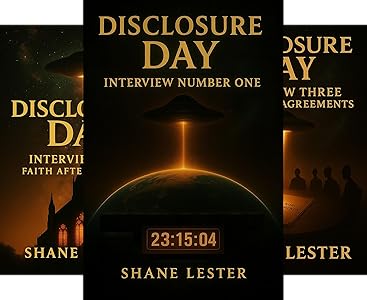
The Disclosure Day novel series imagines how humanity might respond in the days, months, and years after first contact—not by focusing on spaceships, but on leadership, faith, institutions, and the human consequences of disclosure.
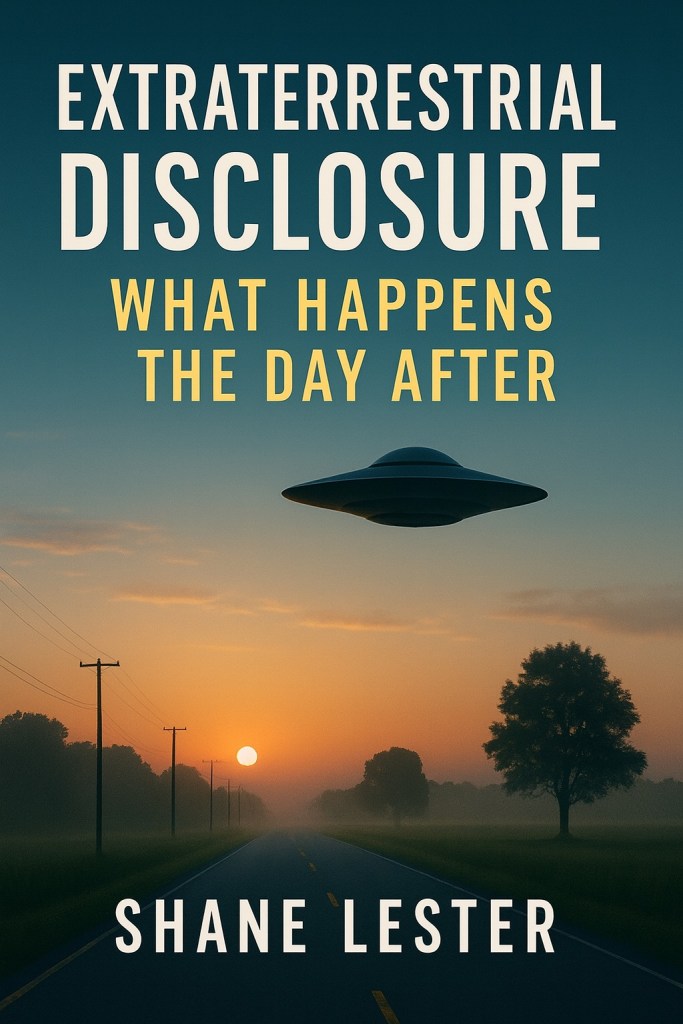
For readers interested in the nonfiction side of the conversation, Extraterrestrial Disclosure: What Happens the Day After examines the psychological, cultural, and societal questions that could emerge if humanity were confronted with a reality-changing event.
Whether or not disclosure ever occurs, the larger question remains the same:
How do we prepare ourselves when the story changes?


